
Protecting Your Product and Your Reputation

By Rodney Hernandez
In the food and beverage industry, I’ve seen how a single oversight can cost a company millions. I’m not just talking about broken bottles or spilled grain; I’m talking about the “invisible” risks like mold, pests, and chemical cross-contamination. When you source food-grade pallets from Logical Packaging, you aren’t just buying wood – you are investing in a risk-mitigation strategy.
In my decades of experience, I’ve learned that “clean enough” is never actually enough. Here is my logical approach to ensuring your supply chain remains compliant and your products remain safe.
What Defines a “Logical”
Food-Grade Pallet?
I often have to clear up a common misconception: “Food-grade” isn’t a single official category, but rather a set of stringent standards designed to meet FDA and FSMA (Food Safety Modernization Act) requirements. When I consult with a new food-production client, I focus on the following considerations:
Grade A Stringer Pallets
I only recommend our highest-quality recycled or new pallets. These have no missing wood, no “plugs” (repair blocks) in the stringers, and zero structural compromises that could harbor bacteria.
Contamination-Free History
I personally oversee our sorting process to ensure that any pallet used for food has never carried chemicals, oils, or hazardous materials in a previous life.
ISPM-15 Compliance
Even for domestic use, I often recommend heat-treated pallets for food environments. The heat-treatment process significantly reduces the moisture content of the wood, which is the most logical way to prevent mold growth before it starts.
GMA Pallets
Considered the “standard pallet” for the majority of consumer goods in the United States. It has a standard 48”x40” footprint and was established by the Grocery Manufacturers Association for driving supply chain efficiency. If GMAs are not required, we can offer a very similar layout, but one that saves $.50-$1.00 on average.
Combo Pallets
Like Grade A’s, combo pallets are display ready, clean, and do not have noticeable repairs. They use brand new stringers and recycled boards. The boards are sourced & sorted from recycled pallets. Only clean boards make it to combo pallets.
Covered Storage
Many food manufacturers also demand covered storage. With a blanket PO or consistent scheduled orders, we hold stock inside our warehouse & load directly into trailers to limit any exposure to the environment.
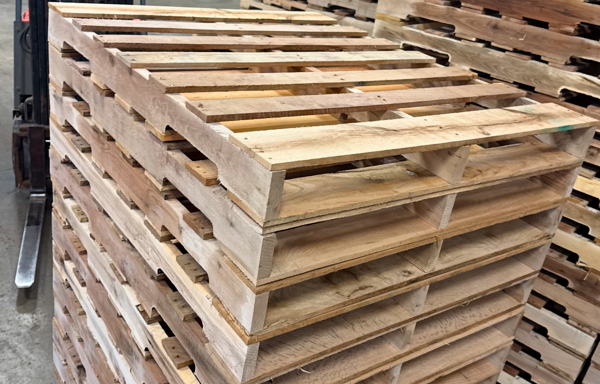
Food Grade Pallets 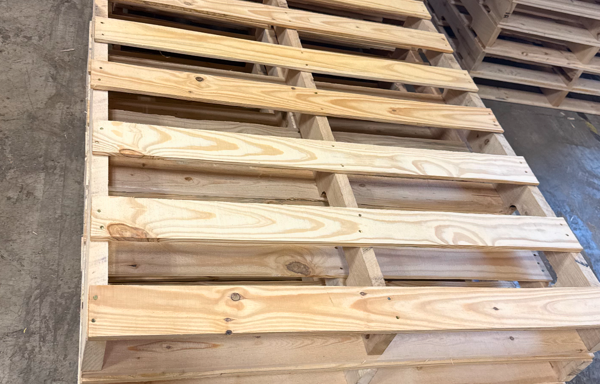
Food Manufacturer Ready 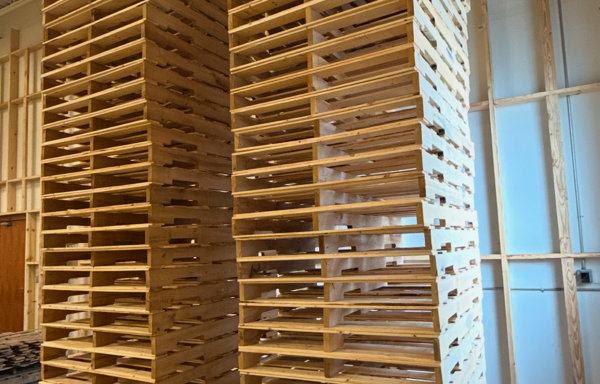
Made with Clean and Fresh Wood 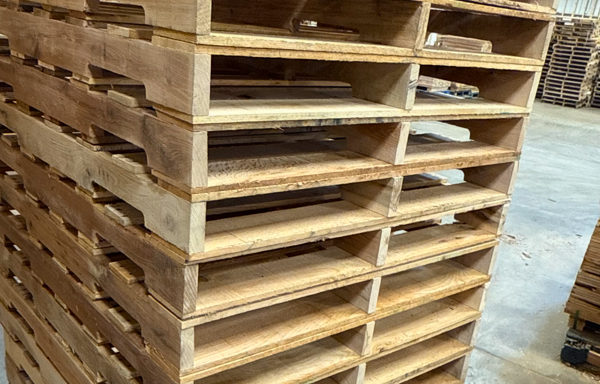
Locally Made in our Warehouse


Plastic vs. Wood: Making the Expert Choice

I get asked this daily: “Rodney, should I switch to plastic?” The answer isn’t always “yes.” While plastic is easy to sanitize, it has a high entry cost. For many of my clients, a Heat-Treated (HT) New Wood Pallet is the more logical choice; it provides the cleanliness required for food safety at a fraction of the cost of plastic. However, if you are running a high-moisture “wet” facility or a clean-room environment, I will be the first to tell you that plastic is the smarter long-term investment. I help you weigh the ROI based on your specific wash-down requirements and cycle times.
Preventing the “Compliance Nightmare”
I’ve sat through enough audits to know that an inspector doesn’t just look at the pallets – they look at the paperwork. That is why I’ve integrated digital logging into our fulfillment. When you order food-grade pallets from us, I ensure that the IPPC heat-treatment stamps are clear and that your documentation is ready for an auditor’s eyes. We take the stress out of compliance so you can focus on production. If you’re unsure which material fits your budget or your specific regulatory needs, I’d suggest looking over our Pallet Page to compare our full range of new, recycled, and custom options.

Developing Your Strategic Pallet Plan
Don’t wait for a rejected shipment to fix your pallet strategy. I am here to help you audit your current usage and find the most cost-effective, compliant solution for your facility. If you are dealing with a specific compliance headache or a looming audit, I’d be happy to review your current pallet specifications and help you find a more logical path forward – simply fill out the request form below or give us a call and I will get back to you personally to discuss your project.